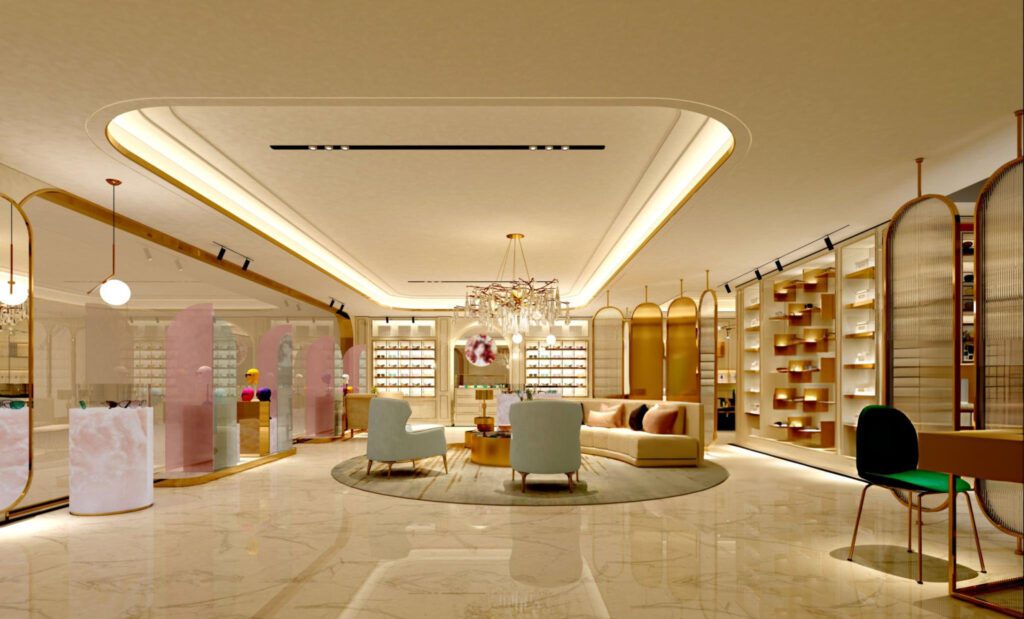
Introduction
Retail is evolving rapidly, and store design is at the forefront of this transformation. With digital integration, experiential shopping, and sustainability driving the future, brands must adapt their retail spaces to stay competitive. At Tripod Global, we specialize in designing future-ready retail environments that blend innovation, aesthetics, and functionality.
1️⃣ The Rise of Experiential Retail
Modern consumers don’t just shop—they seek experiences. Retail spaces must engage customers beyond transactions, offering something unique that online shopping cannot.
Key Elements of Experiential Retail:
- Interactive Displays & Immersive Technology – Digital screens, augmented reality, and smart mirrors.
- Personalized Shopping Experiences – AI-driven recommendations and VIP services.
- In-Store Events & Pop-Ups – Hosting brand activations, product launches, and influencer meetups.
“A great store isn’t just a place to shop—it’s a destination where customers connect with a brand’s story.”
2️⃣ Sustainability in Retail Fit-Outs
Eco-conscious design is no longer optional—it’s a necessity. Consumers are actively choosing brands that align with their sustainability values, making green retail fit-outs a key priority.
Sustainable Fit-Out Practices:
✔ Recyclable & Upcycled Materials – Using reclaimed wood, metal, and eco-friendly paints.
✔ Energy-Efficient Lighting & HVAC – LED lighting and smart climate control reduce carbon footprint.
✔ Minimalist, Modular Designs – Spaces that evolve with trends, reducing waste and renovation costs.
3️⃣ Smart Technology Integration
The retail of the future is powered by technology. From AI-driven personalization to smart store management, integrating cutting-edge tech enhances customer experience and operational efficiency.
Innovations Shaping Retail Fit-Outs:
- Automated Checkout & Self-Service Kiosks – Reducing wait times and streamlining purchases.
- IoT-Enabled Store Management – Smart shelves, RFID tracking, and real-time inventory updates.
- AI-Powered Customer Insights – Predicting shopping behaviors and optimizing store layouts accordingly.
4️⃣ The Shift Towards Flexible & Modular Design
Retail trends change rapidly, and static store designs no longer work. Brands need flexible fit-outs that adapt to seasonal campaigns, new product launches, and evolving consumer preferences.
Key Benefits of Modular Retail Fit-Outs:
✅ Easy Customization – Quick reconfigurations for changing collections or themes.
✅ Cost-Efficiency – Reduces the need for frequent renovations.
✅ Scalability – Enables brands to replicate designs across multiple locations.
5️⃣ The Future of Retail Fit-Outs: What’s Next?
Retail spaces of the future will be:
✨ More Digital – Integrating virtual reality (VR), AI, and real-time data analytics.
✨ More Sustainable – Prioritizing eco-friendly designs and renewable materials.
✨ More Personalized – Creating hyper-customized shopping journeys based on AI-driven insights.
✨ More Community-Driven – Blending retail with social experiences and brand storytelling.